NOW HIRING
Learn more about our open positions.


Mortify Indulgences with Generosity
What does the Bible mean when it refers to the “gnashing of teeth?”
The answer to this question was taken from What does the Bible mean when it refers to the gnashing of teeth? at Gotquestions.org
The precise phrase gnashing of teeth is found in several places in the Bible and is used exclusively in reference to the final judgment of sinners, where it is combined with either weeping or wailing. The Greek phrase for “gnashing of teeth” literally means “grinding one’s teeth together.”
Surely, part of what the gnashing of teeth communicates is pain, especially when the gnashing is combined with weeping. When a person hits his thumb with a hammer, he will commonly squeeze his eyes closed and grind his teeth together hard. The weeping and gnashing of teeth in Scripture, however, is much more dreadful, partly because it lasts for eternity.
Gnashing one’s teeth shows up elsewhere in Scripture in contexts other than feeling pain. In Acts 7:54 the gnashing of teeth is done in anger because of what Stephen had said to the Jewish Council: “They were furious and gnashed their teeth at him.” Psalm 37:12 says, “The wicked plot against the righteous and gnash their teeth at them” (see also Psalm 35:16; 112:10; and Lamentations 2:16). In these passages, wicked persons gnash their teeth at righteous persons as the wicked plot against them or disapprove of them. Apparently, gnashing teeth was a sign of great disrespect and anger.
Jesus’ first reference to weeping and gnashing of teeth comes in Matthew 8:12 where He compares the kingdom of heaven to a feast where “many” come from all parts of the world to “recline at the table with Abraham, Isaac and Jacob.” The others, however, are thrown into “outer darkness” where there is weeping and gnashing of teeth. In His parable of the weeds sown in the field, Jesus again describes the fate of those who reject Him, this time adding to the description “the fiery furnace” into which they will be cast (Matthew 13:41–42). The story of the guest who comes to the wedding feast of the Lamb without the proper clothing is cast into outer darkness where there is weeping and gnashing of teeth (Matthew 22:11–13), as is the wicked servant described in Matthew 24:44–51 and the worthless servant in the parable of the talents (Matthew 25:14–30).
All these references to weeping and gnashing of teeth have one thing in common—the undeniable fact that those who do not belong to Christ will suffer a terrible fate, while His children will enjoy bliss in heaven with Him forever. Hell will be a place of anguish, remorse, pain, and misery. Heaven will be a place where God eventually “will wipe every tear from their eyes. There will be no more death or mourning or crying or pain, for the old order of things has passed away" (Revelation 21:4). The misery that causes the gnashing of teeth will be unknown in heaven, and there will be no weeping, no wailing, and no tears.
Sadly, those who reject God will realize in hell what they have truly lost, and the realization that there is no “second chance” will cause them to feel the full weight of the pain that goes with that knowledge. The anguish of being separated from God does not go away. It is eternal and unrelenting. We all deserve that kind of punishment: “For all have sinned and fall short of the glory of God” (Romans 3:23), but God, in His mercy, made it possible for us to avoid that eternal pain and suffering. Paul explains, “For the wages of sin is death, but the gift of God is eternal life in Christ Jesus our Lord” (Romans 6:23).
All who accept the gift God has provided through the death and resurrection of Jesus Christ will escape the everlasting weeping and gnashing of teeth. Paul proclaims, “If you confess with your mouth, ‘Jesus is Lord,’ and believe in your heart that God raised him from the dead, you will be saved. For it is with your heart that you believe and are justified, and it is with your mouth that you confess and are saved” (Romans 10:9–10). Jesus uses powerful imagery like wailing and gnashing of teeth to illustrate the importance of turning away from the sin that leads to hell and turning to Him who alone provides salvation.
Source: What does the Bible mean when it refers to the gnashing of teeth? at Gotquestions.org
Weeping & Wailing
Weeping and wailing are what those who are unconvinced of who Jesus truly is will be doing when they stand before God on the day of His judgment of the nations
Isaiah 13:6 (NIV)
6 Wail, for the day of the Lord is near; it will come like destruction from the Almighty.
Isaiah 15:3 (NIV)
3 In the streets they wear sackcloth; on the roofs and in the public squares they all wail, prostrate with weeping.
Amos 8:3 (NIV)
3 “In that day,” declares the Sovereign Lord, “the songs in the temple will turn to wailing. Many, many bodies—flung everywhere! Silence!”
Jesus said that those who would be excluded from God’s Kingdom would be weeping and gnashing their teeth
Matthew 8:12 (NIV)
12 But the subjects of the kingdom will be thrown outside, into the darkness, where there will be weeping and gnashing of teeth.”
Matthew 24:51 (NIV)
51 He will cut him to pieces and assign him a place with the hypocrites, where there will be weeping and gnashing of teeth.
Matthew 25:30 (NIV)
30 And throw that worthless servant outside, into the darkness, where there will be weeping and gnashing of teeth.’
How Should The Believer Use Their Resources:
-- Provide for your family: (1 Timothy 5:8)
-- Using our wealth to win the lost: (Parable of the Shrewd Manager: Luke 16:9)
-- Care for those in need (Gal. 2:10; 1 John 3:16–18),
-- Support those in ministry (1 Cor. 9:4–14; Gal. 6:6).
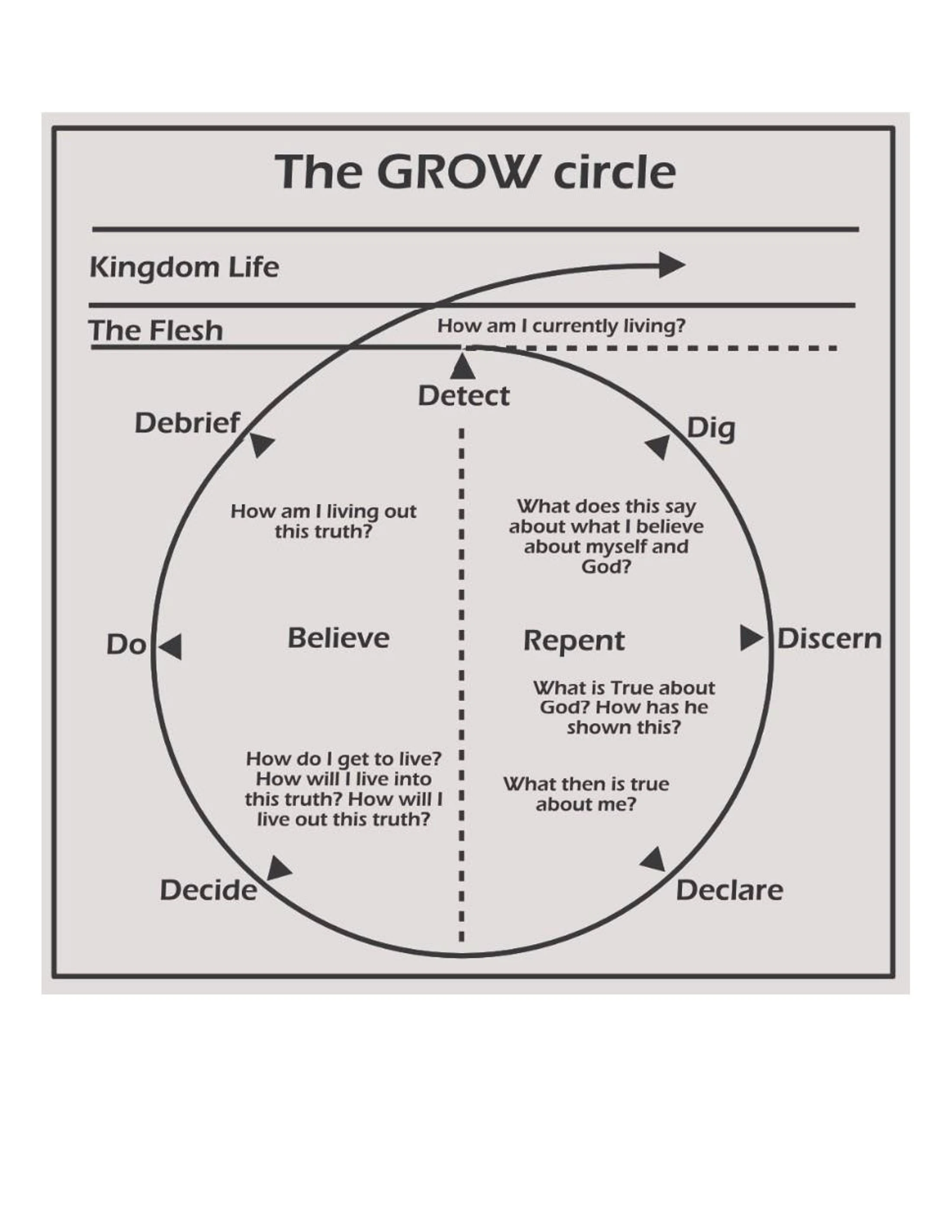
Use the Grow Circle (below) to help you process these questions.
1. James 5:1 – A Warning About What’s Coming
“Weep and wail because of the misery that is coming…”
Where am I placing my ultimate trust right now (money, success, comfort, reputation)—and if I stood before God today, what would that reveal about what I truly depend on? Where am I most tempted to place my security right now—God, or something temporary?
2. James 5:2–3 – The Futility of Hoarded Wealth
“Your wealth has rotted… you have hoarded wealth in the last days.”
If everything I’m investing in today “rotted” tomorrow, what would still matter in my life? What am I holding onto so tightly that I’m not using it for God’s purposes—and why?
3. James 5:3 (second half) – Wealth as a Witness
“Their corrosion will testify against you…”
If my use of money and resources could “speak,” what would it say about my heart and priorities? Am I benefiting in any way—directly or indirectly—from unfairness, cutting corners, or overlooking the needs of others?
4. James 5:4 – Injustice Toward Others
“The wages you failed to pay… are crying out against you.”
Am I using what God has given me primarily for myself, or intentionally for God’s purposes and people in need? Am I treating people—especially those with less
power—fairly, honorably, and with integrity in every area of my life?
5. James 5:5–6 – Self-Indulgence & Final Accountability
“You have lived on earth in luxury and self-indulgence…”
What is one specific change I need to make this week to align my life more with generosity, justice, and dependence on God? Where might comfort and self-focus be dulling my sensitivity to God, others, or eternity—and what needs to change this week?
You can listen to the message that corresponds to these notes and questions once the recording is ready!